
QSR Restaurant Success in India: What Makes Jumboking Franchise Different From Other Fast Food Brands?
/0 Comments/in Blog/by Jiya JoshiWhen people hear the term QSR restaurant, names like burger chains, pizza outlets, and fried chicken brands usually come to mind. But in India’s highly competitive quick-service restaurant market, very few brands have managed to create a category of their own.
Jumboking is one of them.
While most of the food brands are just copying other brands, Jumboking never left its identity. It always stuck to its originality and just created an advanced version. The company transformed a popular street food into an organized QSR restaurant model and created a scalable franchise business around it.
Today, as India’s QSR market continues to grow, many entrepreneurs are looking beyond global brands and exploring Indian success stories. This is where the Jumboking franchise stands out.
The success of Indian QSR franchise
The Indian QSR franchises are witnessing a strong growth. The QSR franchise market is expected to grow at over 10% annually in the coming years.
The reasons for this growth are:
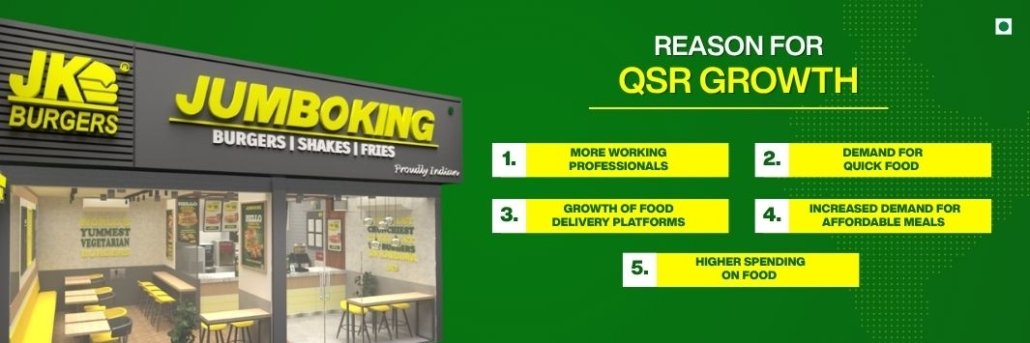
- More working professionals
- Higher spending on food
- Growth of food delivery apps
- Increased demand for affordable meals
- Expansion of tier-2 and tier-3 cities

Why Jumboking Doesn't Compete Like Other Burger Brands
Most of the burger brands just copy international brands and compete on premium products and expensive menu items. Jumboking didn’t follow the traditional strategy but it thought differently. Rather than copying the big brands, Jumboking just revamped their older idea of vada pav. This allows Jumboking to stand out.
What is different in the Jumboking menu?
- Authenticity: Jumboking serves authentic products. The taste is not copied, they serve the authentic taste of India which is loved by Indian customers.
- Affordability: Instead of competing on premium products and keeping expensive menu, Jumboking serves affordable products.
Jumboking serves exactly what customer demands, authenticity packed with affordability. Customers might buy premium burgers occasionally, but affordable products are a habit and habit-purchases create repeat customers and thus a strong business. This simple sales strategy had made Jumboking stand out in the QSR restaurant business.
The Real Advantage of a Jumboking Franchise
Why Jumboking franchise only? Because it is not just a brand but the trust of India. It doesn’t serve the food but the taste of India, which Indian customers love.
A successful restaurant is one which values customers feedback and provides support to their partners to grow.
Jumboking Franchise partners get access to:
- Standardized operating procedures
- Established sourcing systems
- Brand recognition
- Staff training support
- Marketing assistance
- Store setup guidance
Instead of spending years learning through trial and error, franchise owners can start with a proven business model.
Jumboking Location strategy
- Railway stations
- Metro stations
- Commercial districts
- College areas
- Shopping destinations
Why Indian Brands Have an Advantage in the QSR Restaurant Industry
International brands have conquered the food industry for years, but now customers have started demanding for authenticity and that’s where Indian food brands have come to the ground.
Top reasons why demand for Indian QSR brands are increasing:
- Better Understanding of Local Tastes: Indian customers are now demanding for authentic Indian tastes. Local brands adapt faster to this demand, as they have a great understanding of local tastes.
- Stronger Price Positioning: Indian brands offer prices which appeal to a larger audience. The menu consists of a limited menu having affordable prices.
- Wider Market Reach: Affordable products make expansion easier across different cities and customer segments.
Jumboking has successfully leveraged all three advantages. Rather than competing directly with international giants, it created its own space within the QSR restaurant market by serving affordable menu.
Delivery and Digital Growth Are Creating New Opportunities
- Walk-in customers
- Takeaway orders
- Food delivery platforms
- Corporate orders
Conclusion
Indian QSR restaurants are entering a new growth phase. While International brands continue to grow, Indian homegrown brands are also gaining huge attention from customers and entrepreneurs.
Jumboking shows a unique example of how an Indian food concept can be transformed into a scalable and successful franchise business. Its focus on affordability, local taste preferences, high-footfall locations, and operational efficiency has helped it build a strong position in the market.
For entrepreneurs exploring opportunities in the QSR restaurant sector, Jumboking offers more than just a food business. It offers a proven model built around consumer habits, repeat purchases, and long-term market demand.
As the demand for quick, affordable, and convenient food continues to rise, brands like Jumboking are likely to play an even bigger role in shaping the future of India’s QSR restaurant industry.
FAQ's
A QSR franchise is a type of franchise which specializes in serving quick food and operates under a specialised brand name. It focuses on speed and standardized menus. Franchisees buy the rights to sell the products under the brand name in return for fees.
The cost of a QSR restaurant varies according to the brand. While International brands may cost between ₹60-₹95 Lakhs, Indian brands are little affordable. The cost of an Indian QSR franchise brand may fall between ₹5 to ₹50 Lakhs, depending on the business and location.
To open a QSR franchise, you first need to research the market and find out the brand which suits you the most and then fill out their franchise form through the official website only. If you get selected, the franchise team will contact you and guide you through the entire process. You need to finalize the locations and then do the marketing to attract the customers.






Leave a Reply
Want to join the discussion?Feel free to contribute!